Service desk for a property management company: requests from all channels in one window
The task
A property management company in Moscow with more than 30 buildings. Residents post on the city portal, call the dispatcher, send emails and messages to a chatbot. Each channel lives in its own window, and the dispatcher copies requests by hand, picks the service team and tracks deadlines. Overdue requests on the city portal are visible to the regulator, and the company is held responsible for them.
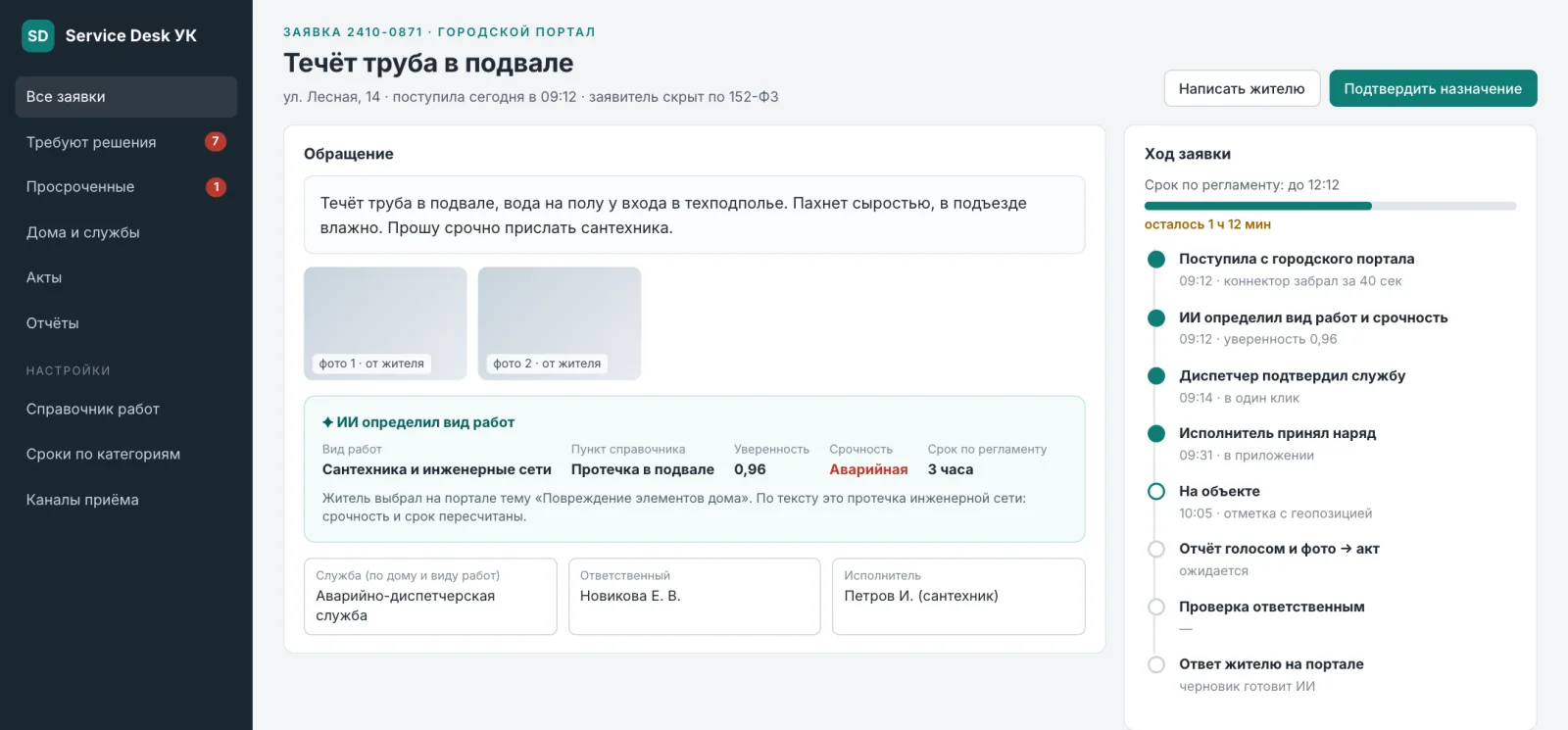
The second pain point is the category. Residents pick a topic as best they can: a leak in the basement gets filed under "damage to building elements", and the request goes to the wrong team with the wrong deadline.
What we did
One dispatch desk for all four channels. Connectors pull requests from the portal, email and chatbot, and the dispatcher logs phone requests with one button. For each request you can see right away how much time is left before the regulatory deadline.
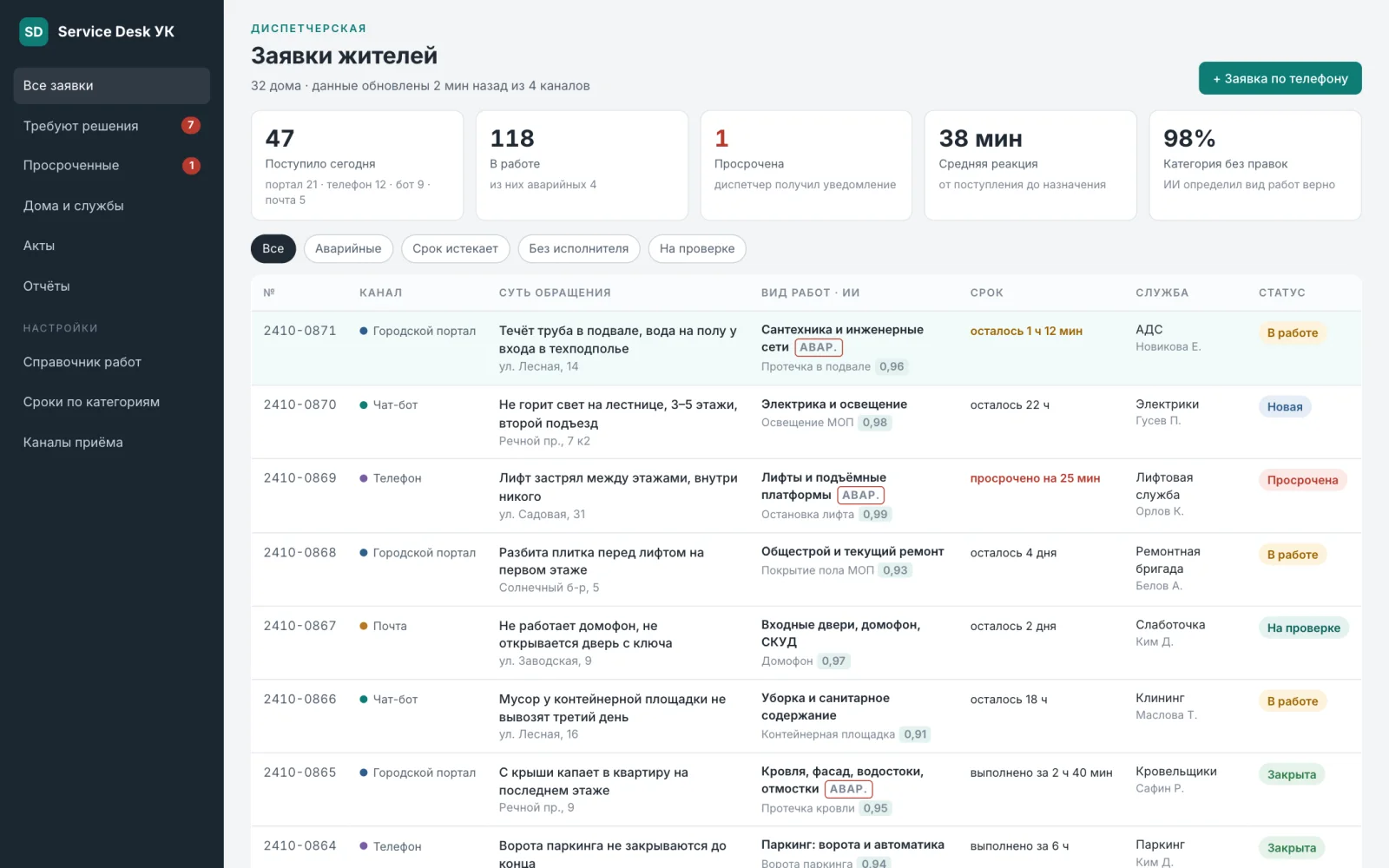
AI reads the text of the request and determines the type of work from the company's reference list: more than ten types of work and several hundred items. If the resident picked the wrong topic, the system recalculates the urgency and deadline. The dispatcher confirms the team in one click; it is chosen based on the building and the type of work. When confidence is low, the request goes to the dispatcher for manual review.
A completion report from a voice report
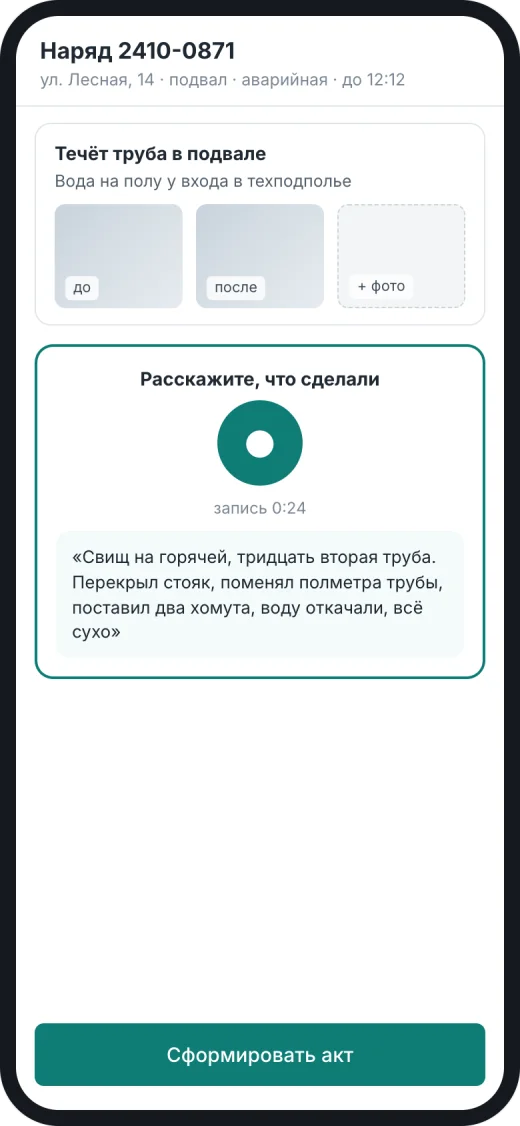
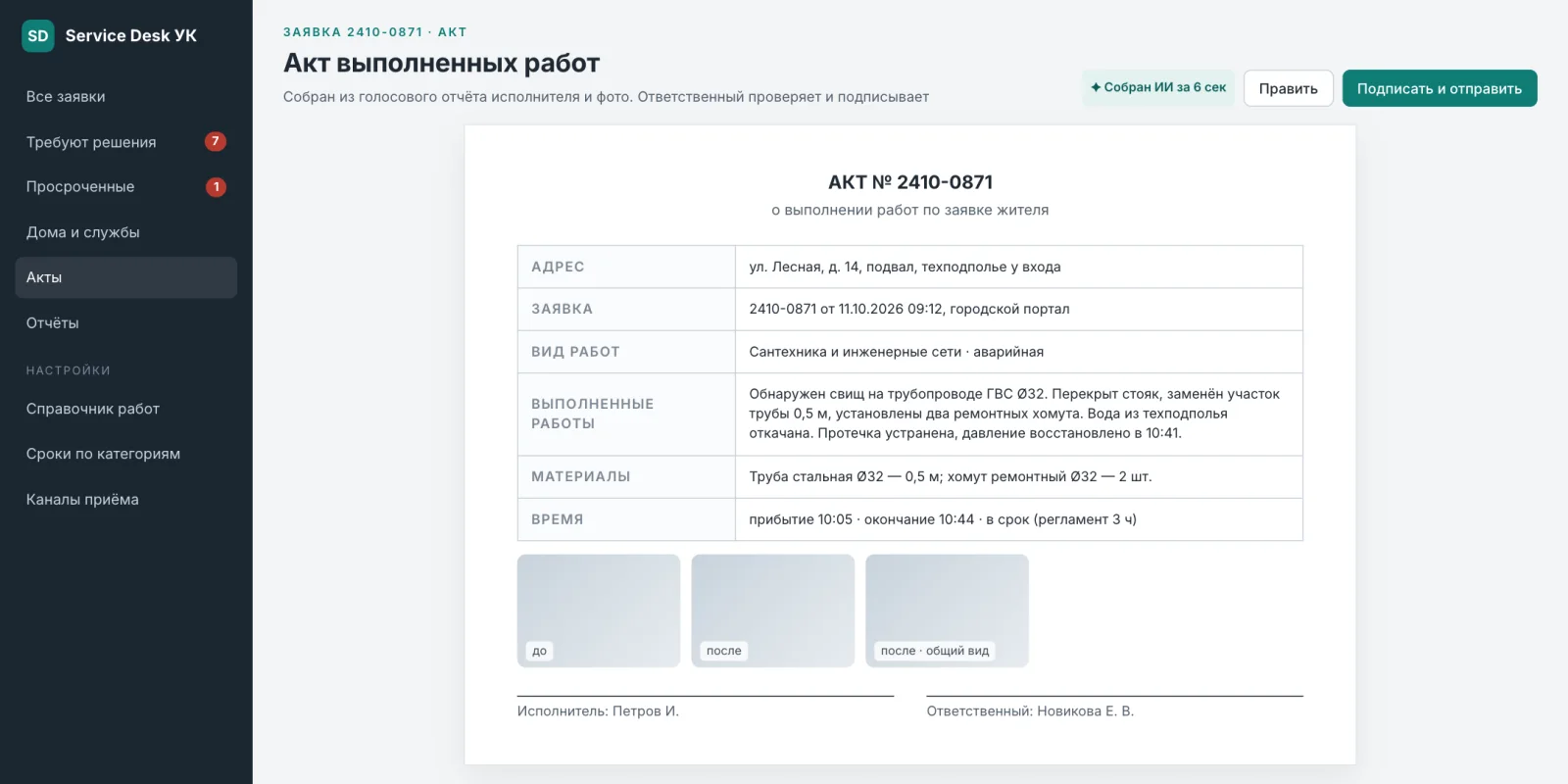
The technician opens the work order on their phone, takes before and after photos and describes what they did. AI turns the description into a report using the company's template: address, work done, materials, time. The person in charge checks and signs the report, and the resident gets a reply in the channel the request came from. AI drafts the reply too.
How we tested the AI
Before promising accuracy, we built a reference set: more than 150 real requests, with labels checked by hand. We ran several models. On the reference set the type of work is identified correctly in about 98% of cases, and all emergency requests are recognised as emergencies. Testing all the models cost a few dollars, so the test can be repeated after every change to the reference list.
Residents' personal data never goes to the model: the text is anonymised before sending. The company chooses the model: Russian, foreign or local.
Who it's for
Property management companies, homeowners' associations and building maintenance services that receive requests through more than one channel.
We'll show the demo on your typical requests and calculate how much dispatcher time it frees up.